

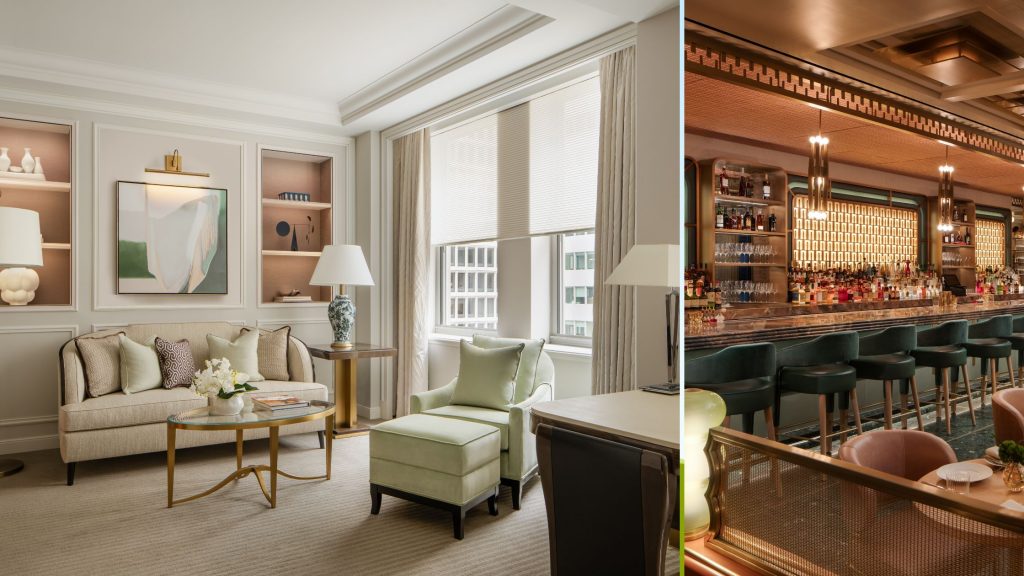
1. Waldorf Astoria New York — New York City
The Icon
Perhaps the most recognizable name in American luxury hospitality, the Park Avenue landmark has been a symbol of New York glamour since 1931.
The Reinvention
Following its 2017 closure, the Waldorf Astoria New York is set to return in 2025 after a monumental eight-year transformation. Its former 1,400-room configuration has been dramatically altered to feature just 375 hotel guestrooms and 372 private residences. Historic public spaces were meticulously restored, while the addition of a 22,000-square-foot Guerlain Wellness Spa and substantially larger accommodations reposition the property for contemporary ultra-luxury travel.
What Stayed
The iconic Art Deco exterior, the grand ballroom, and the spirit of New York history were painstakingly preserved. The goal was to restore the building’s original architectural splendor, not replace it.
Why It Matters
The transformation reflects several major hospitality trends at once: the rise of branded residences, the demand for larger rooms and greater exclusivity, the integration of comprehensive wellness facilities, and the value of historic restoration.
The Inspired Take
A fascinating property for executives who value history but still expect the functionality, privacy, and modern amenities of a contemporary luxury hotel. It’s a masterclass in adapting a legacy asset for the future.
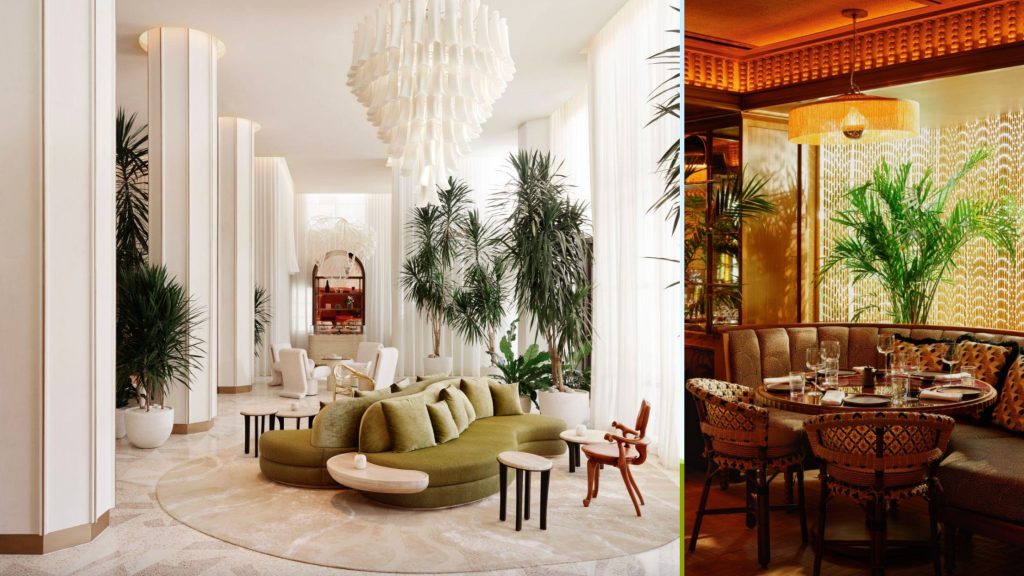
2. Delano Miami Beach — Miami Beach, Florida
The Icon
The 1947 Art Deco property became internationally famous during Miami’s 1990s hotel renaissance under Ian Schrager, defining an era of minimalist design and scene-driven hospitality. It closed in 2020.
The Reinvention
Now under the Rosewood Hotels & Resorts brand, the property is undergoing a complete restoration and is slated to reopen as Rosewood Delano Miami Beach. The project involves a top-to-bottom reimagining of accommodations and public spaces, aiming to restore the building’s historic architecture while introducing Rosewood’s signature style.
What Stayed
The historic Art Deco façade by architect Robert Swartburg remains the anchor of the property. The reinvention respects the architectural heritage that made it a South Beach landmark.
Why It Matters
The Delano has already lived more than one hospitality life. Its new iteration demonstrates the challenge of updating a hotel whose previous design became iconic in its own right, forcing a new owner to decide which legacy to honor.
The Inspired Take
One to watch for Miami business trips where the hotel is intended to be part of the experience, not just a place to sleep. It signals a shift in South Beach luxury toward a more refined, service-driven model.
3. The Surrey, A Corinthia Hotel — New York City
The Icon
A nearly century-old Upper East Side property that operated for decades as The Surrey, known for its residential feel and discreet luxury, before closing during the pandemic.
The Reinvention
Reopened in 2024 as Corinthia’s first North American hotel, The Surrey, A Corinthia Hotel, was completely transformed. The new configuration includes 70 guestrooms, 30 suites, and 14 residences, with interiors by Martin Brudnizki, a Casa Tua restaurant, and spa experiences by Babor.
What Stayed
The building’s elegant pre-war façade and its coveted Madison Avenue address provide the historic framework for an entirely new interior experience.
Why It Matters
Rather than competing through scale, the new Surrey leans into an intimate, residential style of luxury. It’s a bet on personalized service and curated experiences over sheer size, reflecting a wider trend in urban hospitality.
The Inspired Take
A compelling alternative for executives whose New York travel centers on the Upper East Side or who prefer smaller, more private luxury hotels over major Midtown properties.
4. The Vineta Hotel — Palm Beach, Florida
The Icon
A Mediterranean Revival property built in the 1920s, this hotel spent much of its life under the Vineta name before more recently operating as The Chesterfield.
The Reinvention
Oetker Collection, as its first U.S. Masterpiece Hotel, restored the historic ‘Vineta’ identity as part of a top-to-bottom renovation. The Vineta Hotel reopened in late 2023 with just 41 rooms and a fresh design that honors its Palm Beach heritage.
What Stayed
The distinctive pale-pink façade and the building’s architectural character were preserved, grounding the hotel in its historic context.
Why It Matters
The most interesting move was not inventing a new identity but recovering an old one. This represents an important facet of the reinvention trend: sometimes, moving forward means uncovering what was already there.
The Inspired Take
Especially interesting for executive leisure, high-end incentive travel, and Palm Beach extensions around Florida business travel. It offers a boutique European luxury experience in a classic American destination.

5. Park Hyatt Tokyo — Tokyo, Japan
The Icon
Opened in 1994, Asia’s first Park Hyatt became one of Tokyo’s most recognizable luxury properties, immortalized in film and celebrated for its timeless design and commanding city views.
The Reinvention
The Park Hyatt Tokyo closed in May 2024 for a 19-month renewal, its most extensive transformation to date, with a planned reopening in late 2025. The project will encompass all guestrooms, suites, dining, and public spaces.
What Stayed
The project’s stated goal is to protect the hotel’s beloved identity and design philosophy. The core experience—the sense of being in a serene private residence high above the city—is being preserved and enhanced, not replaced.
Why It Matters
Some hotels need reinvention because they have become dated. The Park Hyatt Tokyo presents a much harder problem: how do you renovate something people already consider a design icon without losing its soul?
The Inspired Take
Highly relevant to international executive travel. When it reopens, it will be a key property for business leaders seeking a familiar standard of excellence combined with modern technological and comfort upgrades.
6. Grand Hyatt Singapore — Singapore
The Icon
A major hotel on Orchard Road, this property has been a cornerstone of Singapore’s hospitality scene for more than five decades, known for its scale and MICE capabilities.
The Reinvention
Its multi-year, multi-million-dollar transformation was completed in 2024. The 699-room Grand Hyatt Singapore was repositioned around contemporary design, wellness, and sustainability, with the brand describing the new property as a ‘Grand Living Room’ and ‘Wellness Haven’.
What Stayed
Its prime location and its capacity for large-scale events remain key assets. The transformation was about changing the guest experience within the existing structure.
Why It Matters
This is crucial evidence that reinvention is not limited to boutique hotels. Large properties designed for meetings, groups, and business travelers are being fundamentally reconsidered to meet modern expectations.
The Inspired Take
One of the most corporate-relevant properties on this list. It shows how expectations for business hotels have expanded beyond a simple equation of bed, meeting room, and lobby restaurant to include wellness, thoughtful design, and authentic culinary experiences.
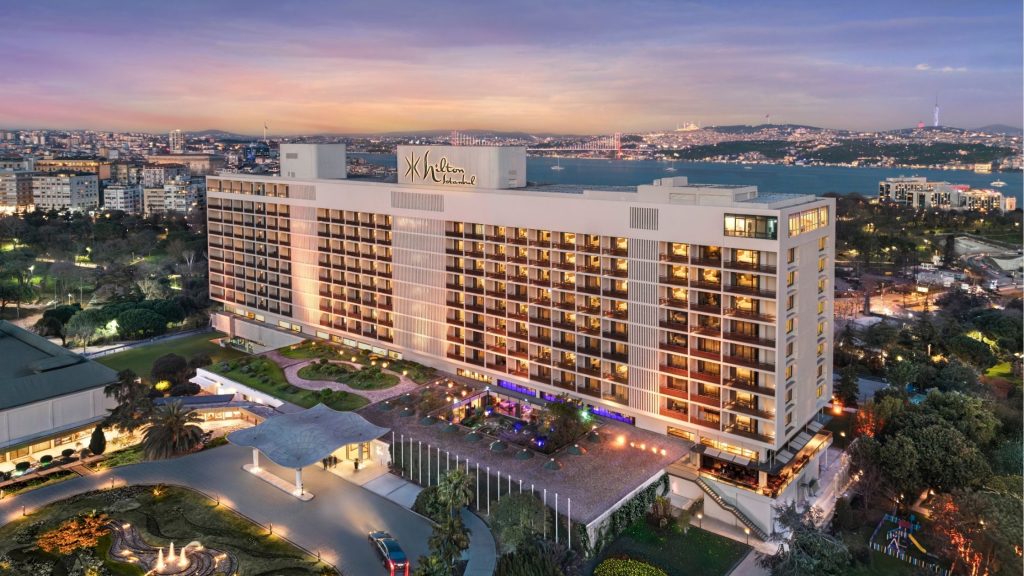
7. Hilton Istanbul Bosphorus — Istanbul, Türkiye
The Icon
Opened in 1955, this is a true landmark of Istanbul hospitality and Hilton’s longest-serving hotel outside the Americas. Its modernist architecture and sweeping views are part of the city’s fabric.
The Reinvention
The Hilton Istanbul Bosphorus has completed a full-scale transformation, including refreshed design across all 499 guestrooms and suites, new culinary concepts, and updated event spaces. The project modernizes the hotel while paying homage to its mid-century roots.
What Stayed
The hotel’s iconic 1950s architecture and its incredible Bosphorus views remain the property’s defining features. The lush surrounding gardens also continue to be a unique asset in the heart of the city.
Why It Matters
This is not just preservation; it’s about keeping a major legacy hotel relevant and competitive within a city whose hospitality market has evolved dramatically around it.
The Inspired Take
With over 4,000 square meters of event space, this hotel has excellent relevance for international meetings, corporate group travel, and executives looking to combine business with leisure time in Istanbul.
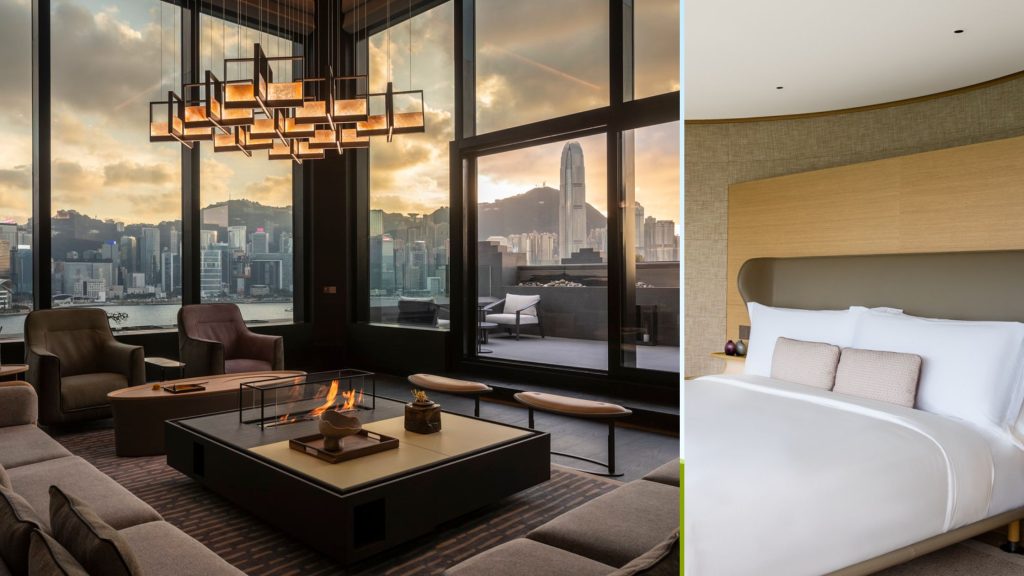
8. Regent Hong Kong — Hong Kong
The Icon
Opened as the Regent Hong Kong in 1980, it later spent two decades as the InterContinental Hong Kong. Its Kowloon location and unparalleled views of Victoria Harbour have long defined the property.
The Reinvention
After its most extensive transformation in history, the hotel returned to its original Regent name in 2023. The new design by architect Chi Wing Lo intentionally frames the harbor as the visual centerpiece of the experience. All 497 guestrooms had reopened by early 2024.
What Stayed
The view. The entire redesign was built around enhancing the hotel’s greatest asset: its front-row seat to the Hong Kong skyline.
Why It Matters
A fascinating case study of a hotel being renovated, rebranded, and ultimately returned to its original, celebrated brand identity. It speaks to the enduring power of a hotel’s original legacy.
The Inspired Take
With Hong Kong’s continuing position as a major global commercial hub, the reinvented Regent Hong Kong has immediate and strong business-travel relevance.
9. Carlton Cannes, A Regent Hotel — Cannes, France
The Icon
The 1913 Carlton is woven into the identity of La Croisette and the Cannes Film Festival. Its magnificent Belle Époque façade and twin domes are instantly recognizable symbols of the French Riviera.
The Reinvention
The hotel closed for two years for a massive transformation, reopening in 2023. The project included restoring the famous façade, reimagining guestrooms, constructing two new wings with residences, and adding landscaped gardens with a large infinity pool.
What Stayed
The historic façade. The Carlton’s global recognition is tied directly to its architectural presence on the waterfront, which was beautifully preserved.
Why It Matters
This is the clearest illustration of the core principle: keep what the world recognizes, and reinvent what happens behind it. It expands the hotel’s footprint and amenities without sacrificing its identity.
The Inspired Take
A premier destination for high-stakes business in Cannes. It is particularly compelling for incentive groups, luxury corporate retreats, and executive leisure extensions.
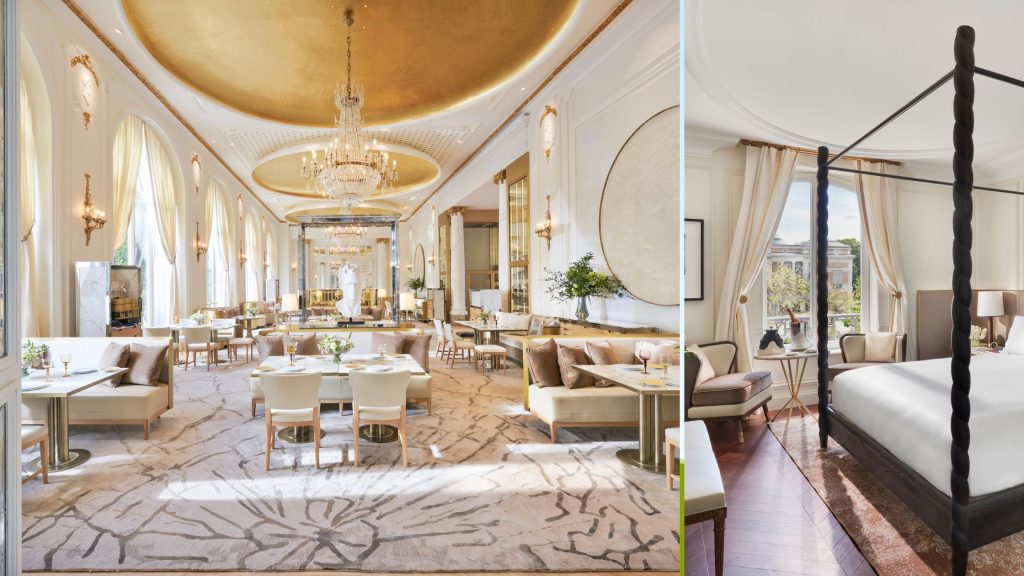
10. Mandarin Oriental Ritz, Madrid — Madrid, Spain
The Icon
Opened in 1910 under the guidance of César Ritz, Madrid’s Ritz helped define the city’s grand-hotel era and has been a center of Spanish society for over a century.
The Reinvention
Following the most extensive restoration in its history, the hotel reopened in 2021 as the Mandarin Oriental Ritz, Madrid. One of the project’s most significant achievements was uncovering and restoring the Palm Court’s historic glass dome, which had been concealed for 80 years.
What Stayed
The Belle Époque spirit and original architectural details were central to the restoration, which was overseen by Spanish architect Rafael de La-Hoz.
Why It Matters
This property perfectly illustrates a key point. Not every modernizing decision involves adding something new. Sometimes, true reinvention means rediscovering a magnificent element that disappeared generations ago.
The Inspired Take
Ideal for executives looking for a hotel that gives a Madrid business trip a powerful sense of place and history, backed by one of the world’s most respected luxury service cultures.
What the Great Hotel Reinvention Tells Us About Luxury
This trend is more than a series of individual renovations; it signals a broader shift in what discerning travelers value.
History Is a Competitive Advantage
Travelers can choose from thousands of beautifully designed new hotels. History is harder to replicate. The building where generations have stayed, the ballroom that hosted famous events, or the façade people recognize immediately—these are strategic assets in their own right.
Luxury Is Becoming More Residential
As seen at the Waldorf Astoria and The Surrey, the move is toward fewer but larger rooms, the inclusion of residences, and a greater sense of privacy and intimate service. This is particularly relevant to senior executives who spend a significant amount of time in hotels.
Wellness Is No Longer Optional
Properties like the Grand Hyatt Singapore and Waldorf Astoria New York show how modern redevelopment treats fitness, spa, and recovery spaces as core infrastructure, not as afterthoughts. For the frequent business traveler, this is a critical factor for maintaining performance on the road.
The Lobby Is Important Again
Reinvented hotels invest heavily in destination restaurants, bars, lounges, and social spaces that attract local residents as well as overnight guests. This creates more dynamic and useful environments for informal meetings, client dinners, and networking.
Reinvention Isn’t About Making Old Hotels Look New
The most successful projects are not trying to erase history. They are asking a more sophisticated question: what deserves to stay, and what needs to change? The goal isn’t to make a 100-year-old hotel look like it opened yesterday. It is to make it work like a hotel designed for tomorrow.
Why Business Travelers Should Pay Attention
Reinvented landmark hotels often combine two things business travelers increasingly want: practicality and experience. This creates a powerful value proposition for any well-managed corporate travel program.
- Practicality: Modern rooms, seamless technology, wellness facilities, flexible meeting spaces, strong dining options, and updated service infrastructure.
- Experience: Unique architecture, local history, distinctive restaurants, cultural relevance, and an undeniable sense of place.
That combination can be particularly compelling for someone who travels frequently and wants to avoid the feeling that every trip is interchangeable. It also makes these properties attractive for executive stays, client entertaining, leadership meetings, and incentive travel. A business hotel can work exceptionally well without feeling like just a business hotel.
Don’t Just Watch the New-Opening List
There will always be compelling ground-up hotel openings. But if you are deciding which properties deserve a place on your company’s preferred list, do not only ask ‘what is new?’. Also ask, ‘what is new again?’. Some of the most interesting developments in hospitality are happening inside hotels travelers thought they already knew.
The next great hotel on your travel list may have opened 100 years ago.


